It’s basically a massive database full of high-quality images of different hairstyles. I mean, look at all the options in that sidebar (and part of it’s cut off):
In total they have 976 pages of hairstyles with about 17 styles each, that’s about 16592 hairstyles to look at.
This is one of the few things I’ll call bs on in arguments of cultural appropriation, considering there’s historical evidence of celts and vikings with dreads. As long as Zac isn’t of the opinion that dreads only look good on white people, then who cares?
hey! sorry, but you’re mistaken.
White celts and vikings never had dreads. I know that’s a common myth, and you’ve likely heard it told as true. Let me explain.
Hair comes in 4 types: straight, wavy, curly, and coily (also called kinky). hair which is wavy, curly, or coily is separated into sub groups (a, b, and c) based on how wide the curve of a lock of hair is.
Dreadlocks are a way of styling coily, curly, and sometimes wavy hair. The natural curve of the hair “locks” together into tight ringlets. Because they are not tangled, just twisted together, they can be washed, styled, and undone.
When straight hair is styled as “dreadlocks,” or when wavy hair is styled incorrectly, what is actually happening is that the hair is allowed to tangle together and become a mat. It must go long periods of time unwashed and unbrushed before it can reach this point. These cannot be untangled, and have to be cut off if you don’t want them anymore. Because they’re matted, rather than twisted, they are dense and can’t be properly washed. They will retain moisture and sometimes even mold, and become hazardous to the wearer’s health.
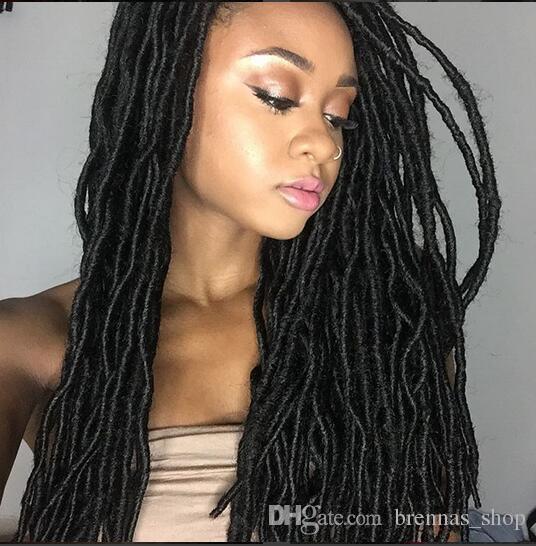
see how the hair here coils around itself? these dreadlocks are clean and shiny, and the hair is healthy.
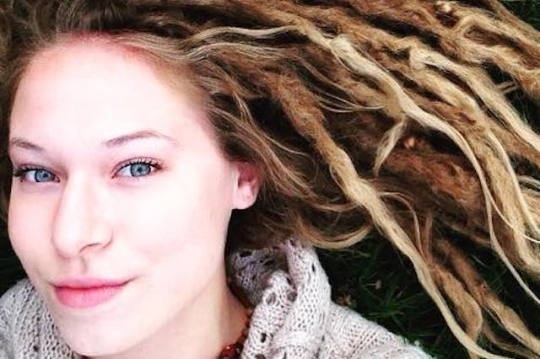
this hair is matted. you can see where the hair in dreads is damaged, and it is tangled rather than curling together.
Now, there were nonwhite vikings and celts, and they may have brought dreadlocks and similar styles in from their own heritage and culture. But vikings were known for their intense preoccupation with hygene and likely would never forsake bathing and brushing for unwieldy and unhealthy mats. Celts were known to sometimes have mats or even plaits, large un-salvageable tangles of damaged hair resulting from not cleaning themselves. Often cited for the celts-with-dreads myth is Romans saying they had “hair like snakes,” which they considered to be uncleanly and barbaric. The Romans had contact with Black cultures, they likely knew what dreadlocks looked like, and recognized their value as a long-term, clean hairstyle.
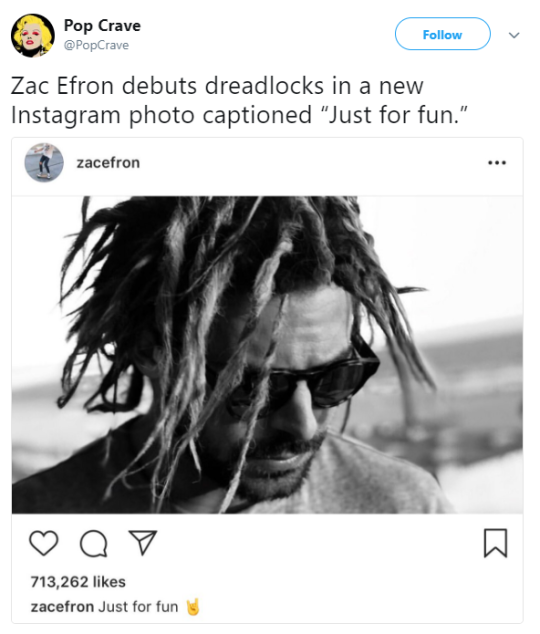
Cut to the present, where it matters. White people, like zac efron, are celebrated for their “edgy” hairstyles while Black people with dreads are fired, or threatened with firing unless they change their hair. I have seen white people with mats working where a Black person was fired for dreads.
I’m white, and can’t speak for the Black experience. But we need to learn to respect and understand when Black people tell us that what we’re doing is wrong, and we need to change our actions and our thought processes.
For further evidence, look at what the Celts called such mats: “elflocks.” They believed that if you were gross and unhygienic, an elf would sneak into your bed at night and create this elflock to let you know they thought you were disgusting. This is hardly a good thing, since it was basically a “kick me” sign to other elves. Some interpretations of the myth say that once you have one, you let it get even bigger and more gross so that the elves and malicious spirits would just plain avoid you because you were so disgusting. Probably because everyone was avoiding you because of your infected, moldy, stinky hair.
Point is, stop pissing off elves with your gross, dirty, white people “locks.”
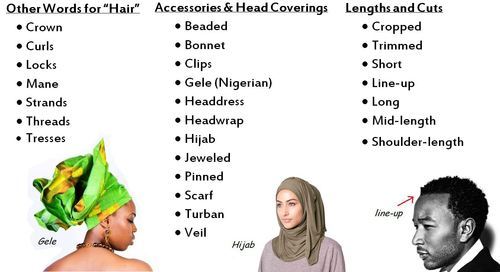
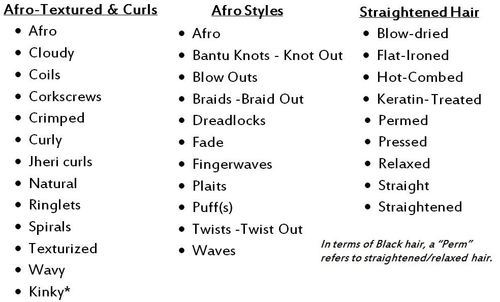
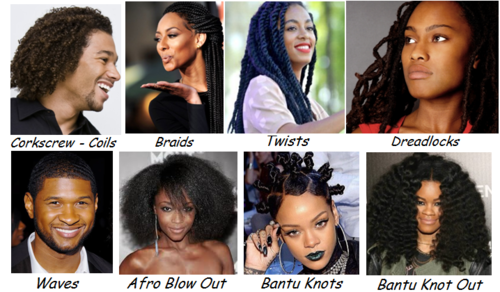
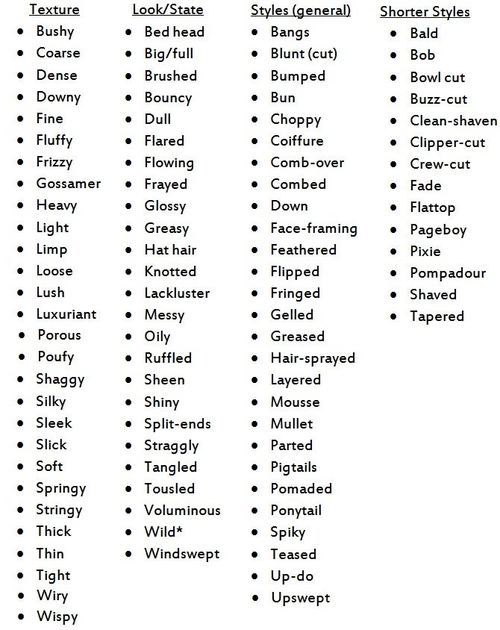
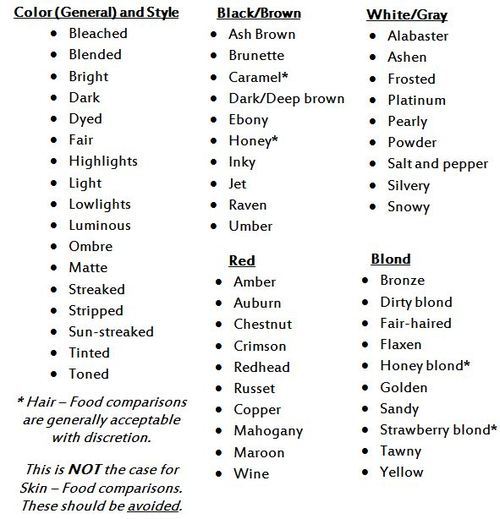
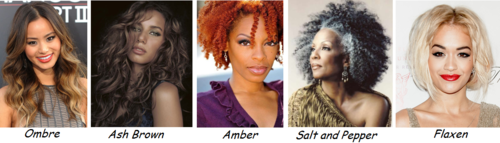
This began as a guide to describing Afro/curly hair but of course, I got carried away. From look and texture of hair, colors and various styles, this guide serves as a thesaurus of sorts for hair, as well as pointers for use in your writing.
Culturally Significant Hair Coverings:
Know the meaning behind head wear and why it’s worn, when and by whom, such as a Native Nation’s headdress, before bestowing a character with it.
Appropriative Hairstyles: Keep in mind that Afro styles should be kept to those in the African Diaspora, such as dreadlocks, cornrows + certain and many braided styles.
Tread carefully describing Afro hair as “wild” “unkempt” “untamed” or any words implying it’s unclean or requires controlling.
“Nappy” and “wooly” are generally words to stay away from, the first having heavy negative connotations for many and the latter, though used in the Holy Bible, is generally not acceptable anymore and comes off as dehumanizing due to Animal connotations.
There are mixed feelings on calling Black hair “kinky.” I’m personally not opposed to the word initself and usage depends on the person’s race (I’m more comfortable with a Black person using it vs. a Non-Black person) as well as their tone and context (if it’s used in a neutral or positive tone vs. negatively/with disdain). Get feedback on your usage, or simply forgo it.
Combination Words: Try combing words to illustrate look of hair. A character with springy coils that dance across her shoulders with every movement, the man with thick silvery hair slicked back into a ponytail…
Mind Perspective: Depending on POV, a character might not know exactly what cornrows or a coiffure style is, at least in name, and it might make more sense if they described the hairdo instead. More defining terms might come from a more knowing source or the wearer themselves. One book I read described a girl’s afro puff as “thick hair pulled up into a cute, curly, poufy thing on top of her head and tied with a yellow ribbon.”
POC & Hair Colors: People of Color’s hair comes in all shades and textures. There are Black people with naturally blond and loosely-textured to straight hair, East Asian people with red hair, and so on. Keep that in mind when coding characters if you tend to rely on hair color alone to denote a character is white vs. a Person of Color.
Related Tropes: There are tropes and discussion related to People of Color, colored hair, and light-colored hair and features.
Finally sat down and completed part 2 of the hair tutorial. Here I discuss how to draw hairstyles for female characters, although I think it can be applied for male characters as well. I mean..hair is hair xD
I didn’t cover how to draw hairstyles that are tied or braided or styled in a special way as I thought the post would be way too long. So I’ll be saving that for another day. If you have any questions just drop me a message or leave a reply and I’ll do my best to get back to you. Hope everyone has fun learning to draw hair as much as I did putting this together 😀
And I just want to say a big thank you to all of those who checked out part 1. I’ll leave a link in case anyone needs it



 Crowfanity's Tumblr