Realistic Stuttering: “Sorry, I uh… I didn’t mean- I didn’t mean to do that…”
When people stutter, they usually reword what they’re saying as they speak, and subconsciously insert “filler words” such as “uh, like, you know,” and etc.
*puts on speech therapist hat*
ACTUALLY! It depends on why they are stuttering.
A Nervous Stutter results in what is called Mazing, or rewording the sentence. That is the classic “I, um… well I… look it’s just that… so we…” that @hellishhues is talking about. When someone is mazing their words you’re seeing a form of Speech Apraxia where the brain is having trouble forming verbal speech. This can be brought on by brain damage, memory loss, anxiety, nerves, and several other things.
The root cause of a nervous stutter is a disconnect between the mouth and the brain.
With this you will also sometimes see the classic “S-s-s-sorry…” especially if the person has been training to speak clearly and is now at a point of fatigue or stress where they are not mentally capable of forming the words.
The other kind of stutter is a Physical Stutter, sometimes referred to as slurring, and another facet of Speech Apraxia. This stutter is caused when the muscles of the mouth, tongue, and throat are physically unable to form certain sounds. This is most often seen in the very young and victims of brain trauma.
Sounds are acquired at different ages, so a 2-year-old will probably not be able to clearly pronounce certain words (which is why toddler sound so off when they’re written with developed dialogue). These mis-pronunciations are sometimes referred to as lisping, but only if the sounds are run together. If the person starts and restarts the sound because they got it wrong, it can also sound like the classic sound stutter.
But it all depends on why the character is stuttering!
Do they have Speech Apraxia, Audio Processing Disorder, muscle dysfunction, or another medical reason to stutter? (1)
Are they stuttering because of anxiety, stress, or fatigue? (2)
Does the stutter stem from intoxication or blood loss? (3)
All of those will sound different!
1 – Will have mazing, repeated sound stutters, and be the classic stutter that annoys OP.
2 – This is where you’ll see the repetition stutter, mazing, rephrasing, and filler words.
3 – This is where you are more likely to see starts and stops and slurring of words.
My mum has apraxia and I just wanted to say that’s one of the most concise and clear ways I’ve seen it explained, thank you!
I cannot emphasize enough how much you need to read thoroughly through the terms of any publication before you send your writing to them. It is mandatory that you know and understand what rights you’re giving away when you’re trying to get published.
Just the other day I was emailed by a relatively new indie journal looking for writers. They made it very clear that they did not pay writers for their work, so I figured I’d probably be passing, but I took a look at their Copyright policy out of curiosity and it was a nightmare. They wanted “non-exclusive, irrevocable, royalty-free, perpetual, worldwide license and right to use, display, reproduce, distribute, and publish the Work on the internet and on or in any medium” (that’s copy and pasted btw) and that was the first of 10 sections on their Copyright agreement page. Yikes. That’s exactly the type of publishing nightmare you don’t want to be trapped in.
Most journals will ask for “First North American Rights” or a variation on “First Rights” which operate under the assumption that all right revert back to you and they only have the right to be the first publishers of the work. That is what you need to be looking for because you do want to retain all the rights to your work.
You want all rights to revert back to you upon publication in case you, say, want to publish it again in the future or use it for a bookmark or post it on your blog, or anything else you might want to do with the writing you worked hard on. Any time a publisher wants more than that, be very suspicious. Anyone who wants to own your work forever and be able to do whatever they want with it without your permission is not to be trusted. Anyone who wants all that and wants you to sign away your right to ever be paid for your work is running a scam.
Protect your writing. It’s not just your intellectual property, it’s also your baby. You worked hard on it. You need to do the extra research to protect yourself so that a scammer (or even a well meaning start up) doesn’t
steal you work right from under you nose and make money off of it.
Exclusive publishing rights have to have a set time frame! Do not agree to anything that doesn’t clearly state “up to five years from signature” or something like that.
What if the publisher goes defunct? What if they get bought by another publisher who doesn’t care to promote or publish your work? You still can’t to anything with it, you don’t own it anymore!
@deadcatwithaflamethrower i think it might interest you (if not directly for you then it might be of interest for your followers)
This is one of the many reasons that you do not publish your work through Amazon. They contractually own your property in perpetuity, i.e. forever, if you use their publishing service. Theft, okay? Stuff like the above is legal theft. Watch your asses, loves.
(And it’s one of the reasons I’m so screamingly frustrated about not being able to devote any spoons to running Altered Nature Press, because one of its main tenants was I Don’t Own Your Work, You Own All Of Your Work Forever.)
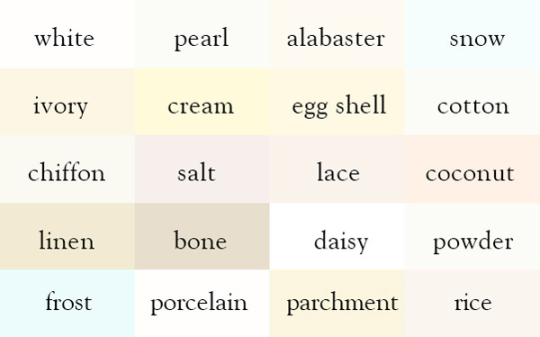
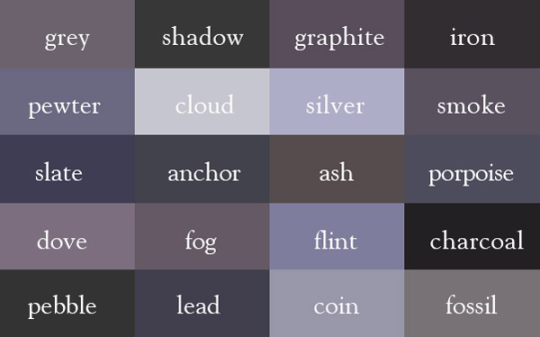
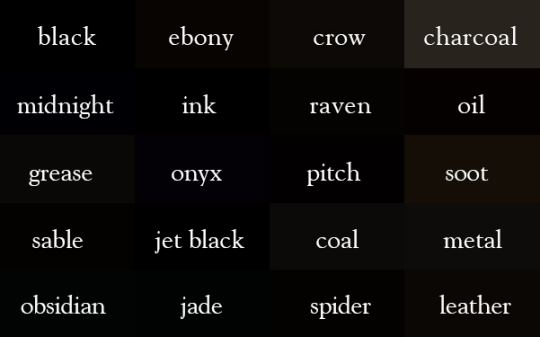
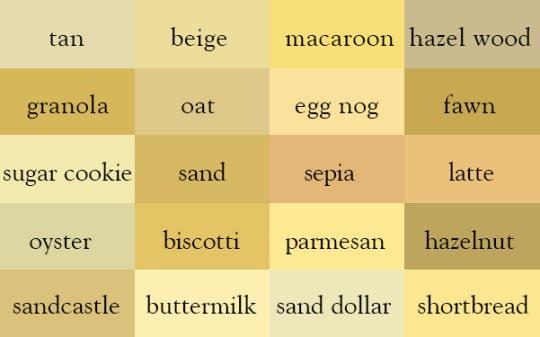
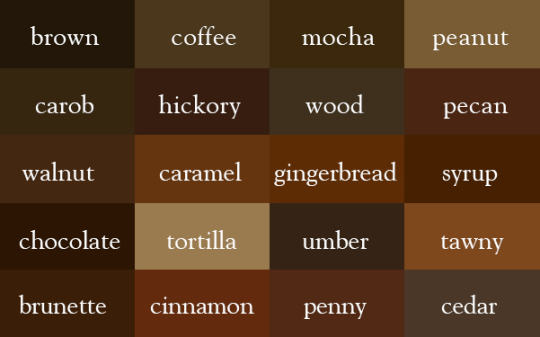
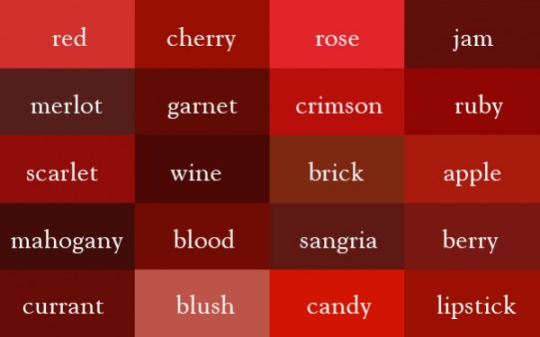
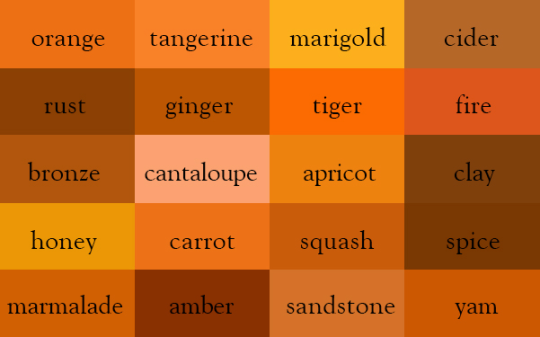
THAT FIRST SITE IS EVERY WRITER’S DREAM DO YOU KNOW HOW MANY TIMES I’VE TRIED WRITING SOMETHING AND THOUGHT GOD DAMN IS THERE A SPECIFIC WORD FOR WHAT I’M USING TWO SENTENCES TO DESCRIBE AND JUST GETTING A BUNCH OF SHIT GOOGLE RESULTS
fanfic: this character has had several bottles of hard liquor and they’re just slurring their speech slightly and for some reason are not in the hospital with alcohol poisoning
me: ….you’ve literally never had a drink in your life have you
very good point.
Alcohol For the Non-Drinking Fanfic Writer, a primer by me
There’s a shit ton of variability in response to alcohol depending on body mass, history of drinking (your liver can upregulate the CYP450 enzyme responsible for metabolizing alcohol but only to a certain point; chronic alcoholics hit a point where their livers are so trashed they lose this and go back to getting drunk off small amounts of alcohol), and ethnicity (people of East Asian descent are more likely to lack a critical enzyme for breaking down one of the metabolic steps in the degradation of ethanol and are stuck in the shittiest part of it, with flushing and nausea), and other factors.
But if I had to guesstimate for writing:
1 drink (a tall glass of beer, a can of beer, or a shot of hard alcohol in a cocktail or alone): are you a burly dude? you may or may not feel it. are you a tiny lady? you will probably notice it.
2 drinks: burly dude may or may not be noticing it. tiny lady like me: this is a sweet spot where you’re talkative but not drunk. (Note: people don’t go from zero to “so drunk you remember nothing/are profoundly disinhibited.” There’s a lot of ground to cover in between.)
4 drinks: burly dude still feeling it, tiny lady ready to FUCKING FIGHT YOU
5 drinks: burly dude, slow down, buddy, you gonna polish off that six-pack by yourself? That’s going to hurt in the morning. Tiny lady: oh my GOD stop. Go to bed.
This is where we draw the cut-off for a “binge,” if you were wondering. More than this and you’re officially binge-drinking, where your odds of serious harm go up sharply. From alcohol, but also from the bad decision dinosaur that plagues you when you binge-drink.
a fifth of anything by yourself: Sir. Sir, can you hear me? Sir, I need you to open your eyes. Squeeze my fingers. Sir, you’re in the emergency room.
Splitting a bottle of wine between two adults: generally like three drinks each, you’ll feel it but you’ll survive. (A bottle of wine between three adults: usually not quiiiiiite enough.)
An entire bottle of wine by yourself: oh, so you enjoy suffering?
Other Fun Medical Alcohol Facts: high-proof alcohol like vodka will temporarily paralyze your pyloric sphincter, so the alcohol can’t get into your gut for about twenty minutes. Then, when it DOES get into your small intestine, enjoy getting uncomfortably drunk too fast.
Alcohol is a zero-order metabolizer: that means that nothing on Earth can sober you up except time*, and the time it takes is linear, directly related to how much you drank. Most of us can clear about a drink an hour, so if you’re drinking slowly you can stay roughly sober all day. Most of us don’t drink that slowly. Hangovers are made awful by a metabolic intermediate (literal acid in your blood!!!! it’s so shitty!!!!!!!) that makes you nauseated and feel super gross, and not every drinking episode will lead to a hangover, and severity of hangover varies greatly by person and amount drunk.
So please never write someone having coffee to “sober up.“ Now they’re drunk AND they can’t sleep. Bad combo. Sucks for driving. Splashing cold water on your face? No. Amphetamines? Good Lord what’s wrong with you. Look, the room’s gonna spin, you fucked up your endolymph in your semicircular canals, deal with it. You can partially override that with proprioceptive feedback–keeping one foot on the floor to get tactile input–but it’s just gonna suck for a while.
The variability in capacity is real; my aunt-in-law, who is roughly my size, can drink me under the table easily. She’s a high-powered business executive who has martinis with lunch. I tried to keep up with her once and had to call in sick. So you don’t HAVE to write a character having a “normal” alcohol tolerance, but don’t get into “yep, definitely alcohol poisoning” territory, please.
This has been Please Don’t Show Up In My Emergency Room, I Hate Getting Barfed On by your local friendly medical trainee.
*this is technically not true, but no substance you can get your hands on will do it. hmu if you want to hear the story of the EtOH receptor antagonist andwhy it never went to market, what with all the dying.
what’s the EtOH receptor antagonist???
okay whew. here we go. there has been a LOT more interest in this than I was expecting (I was expecting none, to be clear), and it has been approx. 8 billion years since I was in undergrad, which is the last time I can reasonably claim to have been CURRENT on Neuro research. (I did my master’s at an institution that does not have what one might call a robust Neuro department and mainly did Stats.) So if a real live Neuro person comes on here and contradicts me, you should probably believe them.
BUT. Here is the story, as I recall it:
Alcohol, or, as we fancy-schmancy-pantsy medical types like to call it to distinguish it from the bajillion other alcohols out there (”alcohol” describes a general type of molecule in chemistry, not the good ol’-fashioned Get You Drunk molecule) ethanol, abbreviated EtOH, is what’s generally called a “sedative-hypnotic.” What that means is that it doesn’t work on opioid receptors, it doesn’t work on cannabinoid receptors. It does stuff to your GABA receptors–GABA being the major inhibitory neurotransmitter–and it also binds to other stuff. We still don’t have its actions in the brain fully mapped. But we know, and we’ve known for a while, that it does stuff to GABA receptors.
A major pharmaceutical company developed an honest-to-God antagonist. If you’re not a pharm person, you may be going, “a what now?” First point: damn near everything your brain does is determined by neurotransmitters and the receptors that love them. Neurotransmitters interact with their receptors in a variety of ways, with a HUGE variety of end results. Humans love jamming other chemicals that are not neurotransmitters into their receptors. Why do opioids work? Because they mimic NTs we make ourselves. Why does cannabis get us high? Because it mimics endogenous (”originating inside”, self-made) NTs. Manmade molecules that alter us are hijacking built-in systems. Don’t even get me started on how fucking bananas cool it is that neurons can adapt to neurotransmitter levels, and in a super awesome sci-fi-like variety of ways. Take a Neuro class! Take five! Take seventeen! Most fun I ever had was in a Neuro lab.
So what’s an antagonist? It’s something that, one way or another, makes it so the NT can’t do its thing at the receptor.
The line of thinking went, if we can keep ethanol from doing its thing at the GABA receptor, we can make people sober again. They can drink and then take a pill and be sober. Wouldn’t that be AMAZING? Wouldn’t that be lucrative? These are questions that drug companies think about a LOT.
So they made the chemical! Its name is
Ro15-4513. You can Google it and get a WAY less interesting description of what went down. But how my professor explained it to us is like this:
It works. It’s an ethanol antagonist at the GABA receptor. You take it and it blows the ethanol off the receptor and you’re sober. And… because humans are awful, you get drunk again. You take another pill. You’re sober again. The time that pill is active is less than the time it takes your body to metabolize ethanol, so you’ve still got all that ethanol swishing around in your system waiting to murder you via aspirating your own vomit the hot second it wears off, but by God, you’re sober.
Except, as mentioned, the GABA receptor is not the only place where ethanol does stuff. One of the effects it has, since it’s such a teeny tiny molecule, is fucking with the lipid bilayer that forms the bulk of your cell membrane. If you’re a Neuro person, you’re getting cold chills right about now, because the only reason neurotransmission works is the properties of the lipid bilayer. You have to be able to transmit electricity down the axon of the neuron to generate an action potential. The lipid bilayer is what allows you to do that.
The pill does nothing for that. So if you take enough of the pill, and keep drinking, there comes a point where you’ve fucked the lipid bilayer beyond repair. You can’t transmit messages. Your brain doesn’t remember how to tell your body to do things like breathe, or not have seizures. And you die!
So, in summary, we have a pill that could make you a responsible designated driver, but actually fucking kills you because people have no self-control.
Moral of the story: Neuroscience Is Super Fun!!!!! It was my gateway drug into medicine. I would never have gone to medical school if it weren’t for my Behavioral Neuroscience professors.
today on: humanity’s hubris has led to so many things being bad when they were designed to be good
I saw EtOH antagonist and immediately knrw where thay was going.
A small list of random ass sites I’ve found useful when writing:
Fragrantica: perfume enthusiast site that has a long list of scents. v helpful when you’re writing your guilty pleasure abo fics
Just One Cookbook: recipe site that centers on Japanese cuisine. Lots of different recipes to browse, plenty of inspiration so you’re not just “ramen and sushi”
McCormick Science Institute: yes this is a real thing. the site shows off research on spices and gives the history on them. be historically accurate or just indulge in mindless fascination. boost your restaurant au with it
Cocktail Flow: a site with a variety of cocktails that’s pretty easy to navigate and offers photos of the drinks. You can sort by themes, strengths, type and base. My only real annoyance with this site is that the drinks are sometimes sorted into ~masculine~ and ~feminine~ but ehhhh. It’s great otherwise.
Tie-A-Tie: a site centered around ties, obviously. I stumbled upon it while researching tie fabrics but there’s a lot more to look at. It offers insight into dress code for events, tells you how to tie your ties, and has a section on the often forgotten about tie accessories
Even more:
Types of High Heels: A page describing twenty five different types of high heels. It gives a description and pictures. Shake it up from just “stilettos and kitten heels”
Random Job Generator: Exactly as it says. The site offer more generators like characters, plots, or town names.
because I see this everywhere and most people don’t know about it. The hyphen(-), the en-dash(–) and the em-dash(—) are three completely different things with completely different uses. If you write fanfiction, it’s likely that your readers won’t care, but if you want to submit a manuscript for publishing, you need to know the difference.
The hyphen (-) is the basic symbol you find on your keyboard, and it’s meant to only be used for hyphenated words (well-being, two-thirds).
The en-dash (–) is a slightly longer dash. It’s usually the width of an uppercase N, hence the name. You can find it by looking through the ‘insert symbol’ option in MS word or many word processors, and it is meant to be used to show a particular distance, or for intervals (May–August, 1900–1916, pages 12–22)
The em-dash
(—)
is what people most commonly use, but they refer to it as a hyphen. It’s the longest dash, about the size of an uppercase letter M, and you can either find it through the list of symbols in your word processor, or some word processors actually automatically transform two hyphens (–) into an em-dash
(—). It is meant to be used as a break in the sentence, in a place where a comma, semicolon or colon would normally be used or as a break in dialogue. (Her niece—the daughter of her oldest sister—is the one over there.)
*All three types of dashes are normally meant to be used without any spaces on either side of the dash.

 Crowfanity's Tumblr